
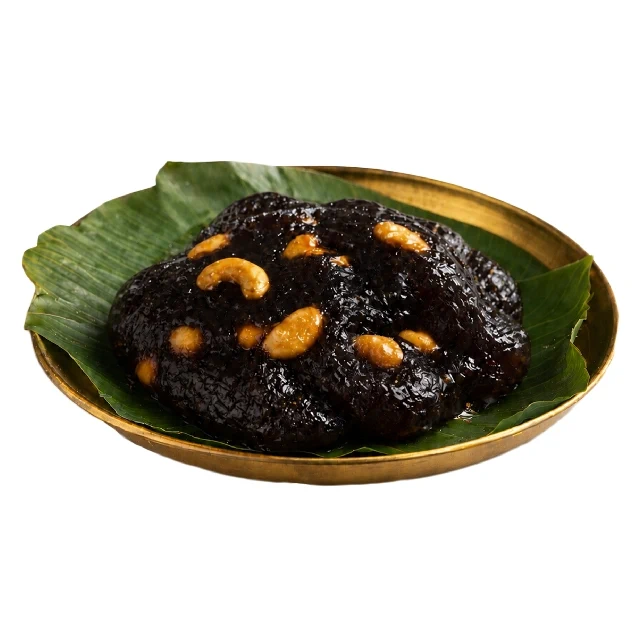
Karupatti wheat halwa at home
Karupatti wheat halwa is the Tirunelveli-style wheat cook with palm jaggery instead of a sugar-only syrup. Karupatti is jaggery from palm sap, not sugarcane. The finished sweet should be darker, with a caramel depth, then a warm lift from cardamom and dry ginger (sukku). It is still mithai - not medicine. For the ingredient story, read what Karupatti wheat halwa is.
This recipe is a home-scale method. Crescent’s kadai process is documented in how Karupatti halwa is made. If you want the flavour without straining jaggery grit for an afternoon, buy a labelled Karupatti pouch or gift box.
Yield and time
About 500–600 g. Soak wheat overnight. Cooking is 90–150 minutes of stirring. Palm jaggery scorches faster than sugar, so the flame must stay moderate and the spatula must keep moving across the whole base of the pan.
Ingredients
- 200 g whole wheat, soaked overnight and extracted as wheat milk (same method as the Tirunelveli halwa recipe)
- 350–400 g Karupatti (palm jaggery) and organic Sugar, chopped
- About 100 ml water to melt the jaggery and organic Sugar
- 250 g pure ghee, plus 1 tablespoon to fry cashews
- 50 g cashews
- 4–5 green cardamom pods, crushed, or ½ teaspoon cardamom powder
- ¼–½ teaspoon dry ginger powder (sukku) - start small; it should warm the finish, not taste like a cold tablet
Do not swap Karupatti for random sugarcane jaggery and still call it Karupatti. The flavour will be different. Strain melted palm jaggery through a fine sieve; blocks often hold sand-like grit.
Step 1 - Wheat milk
Soak, grind, and strain the wheat exactly as in the Tirunelveli recipe. You need a smooth extract, not lumps of paste. That extract is what makes this wheat halwa rather than a jaggery candy with flour stirred in.
Step 2 - Melt and strain the palm jaggery and organic Sugar
- In a separate small pan, warm the chopped Karupatti with a little water until it melts.
- Strain into a bowl. Discard grit. Let it sit off a raging boil before it meets the wheat - dumping boiling jaggery onto starch can seize or scorch.
Step 3 - Cook wheat, then combine
- Start the wheat milk in the kadai on medium-low, stirring until it thickens slightly and no longer smells raw.
- Add the strained palm jaggery syrup. Mix thoroughly. Colour will deepen; watch for bitter smoke - that is scorch, not “caramelisation.”
- When the mass begins to pull from the sides, add ghee in stages, the same way as sugar-based Tirunelveli halwa. Emulsify each addition.
- Fry cashews in a little ghee. Add them near the end with cardamom and dry ginger. Stir until the spices smell toasted and sweet, not dusty.
Doneness
Ready Karupatti wheat halwa looks glossy and darker than the sugar version. It should taste of palm jaggery, wheat, and ghee together, with cardamom and sukku as a finish. If it only tastes of burnt sugar, the pan was too hot. If it tastes only of jaggery water, the wheat extract was undercooked.
Cool and store as a fresh sweet. No-preservative home batches are not courier products.
Why Crescent still cooks this at scale
Palm jaggery is uneven from block to block. A heritage kitchen that already cooks wheat extract every day can keep Karupatti as a named flavour next to Tirunelveli and Moscoth, with the same packing: pouches, boxes, tins. That is the practical reason to order Crescent Karupatti wheat halwa after you have tried the home method once - or instead of it, if you are gifting.
Compare the two styles in Karupatti vs Tirunelveli wheat halwa. For where these sit among carrot, moong, and Kozhikode sweets, see types of halwa in India.