
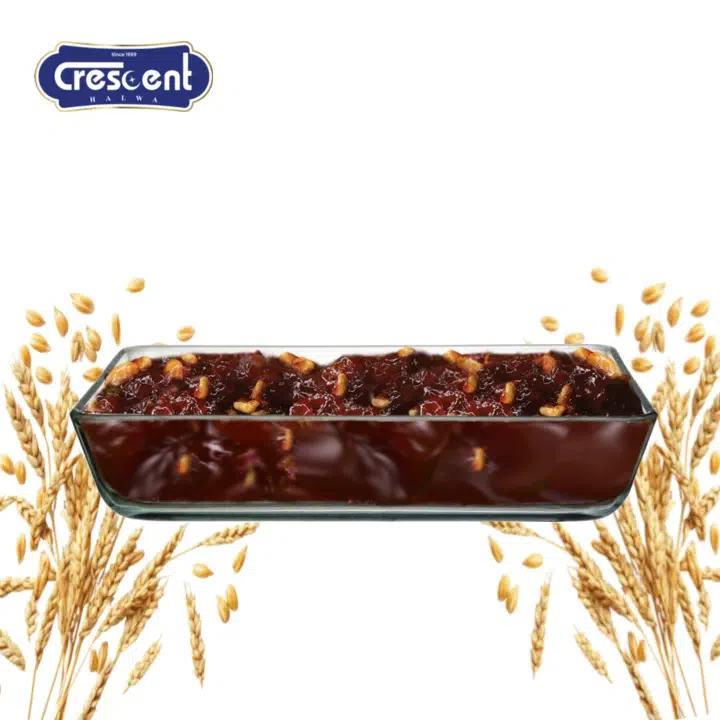
Moscoth is a process flavour
How Moscoth wheat halwa is made matters more than a poetic name. Crescent cooks it as traditional wheat halwa: extract, slow heat, pure ghee, no preservatives. The Moscoth line exists so buyers can pick a wheat-forward variant without guessing whether they ordered Karupatti or classic Tirunelveli. For the definition, see what is Moscoth wheat halwa.
Extract, not dumping flour
Wheat is soaked and worked into a smooth extract. That liquid is what thickens in the kadai. Flour dumped into hot syrup is a different sweet and a different mouthfeel. If you have ever tasted “wheat halwa” that felt like upma with sugar, that cook skipped this step.
Hours, not minutes
The mixture is stirred while moisture cooks off and ghee is folded in. This is labour. It is also why the sweet can be packed for pan-India delivery without a preservative list. A wet, undercooked mass would spoil or weep in a pouch. A finished Moscoth batch should look glossy and set with a clean wheat-ghee aroma.
Finish and pack
Nuts go in late. Packing happens in the same retail formats as our other flavours so shops and families can mix SKUs. Karupatti’s cook is documented in how Karupatti halwa is made if you are comparing kadai notes.
Order Moscoth from Crescent products. You are buying time in a pan, not a flavour chemical.
Why we publish the method
Searchers who ask how Moscoth wheat halwa is made deserve a kitchen answer, not a slogan. The best halwa in India is still the one whose steps you can describe: wheat, ghee, patience, sealed pack. That is the Crescent method for Moscoth.
From kadai to courier without changing the sweet
After Moscoth wheat halwa is cooked, the risk is no longer the flame. It is cooling, packing, and heat in transit. We pack for the format you ordered. A pouch is not a tin. A tin is not a tray. Each is a different way to keep air and handling off a ghee sweet that has no preservative safety net. That is why variant URLs and pack names matter at checkout.
On arrival, you should smell wheat and ghee, not cardboard or soap. If a pack was cooked as Moscoth, it should not taste like Karupatti. If it does, something in labelling failed - which is why we keep flavours as separate variants instead of a mystery “assorted” slab. How Moscoth wheat halwa is made includes that discipline after the kadai, not only the stirring story.
Retailers who portion from trays must use clean tools and not leave product open under lights. Families should close the pouch. Everyone should treat it as mithai with a clock, not as an immortal candy. The Tirunelveli-style process gives you a head start. It does not make physics optional.
We publish this so “traditional” is a sequence of steps you can inspect: extract, slow cook, ghee, pack, ship. Moscoth is that sequence with a wheat-forward flavour name. Buy it when you want that sequence in a labelled Crescent pack, not when you want a shortcut dessert with a rustic font.
Where this sits on crescenthalwa.in
Every flavour article on this blog is meant to send you to a real pack, not to a dead-end essay. Open the products page after you know whether you want Tirunelveli wheat halwa, Karupatti (palm jaggery) wheat halwa, or Moscoth wheat halwa. Match the pack to the occasion: pouch to taste, gift box to celebrate, tin or tray when volume and wholesale minimums apply. The best halwa in India is still a cooked sweet with pure ghee and no preservatives - 50+ years heritage, named, and shipped pan-India when you order with a clear flavour and a clear pack.
If you arrived from search, stay for the definition, then leave with a decision. Sibling guides on Karupatti, Moscoth, gifting, and wholesale exist so you do not have to guess in a festival week. Crescent’s job is the kadai and the pack. Your job is to pick the flavour the table will actually finish.
When you reorder Moscoth, use the Moscoth variant URL so dispatch does not substitute Tirunelveli. Named flavours only work if the checkout stays named from kadai to courier.